Launch offer — valid today only

📄 Digital book in PDF · read it on your phone or print it

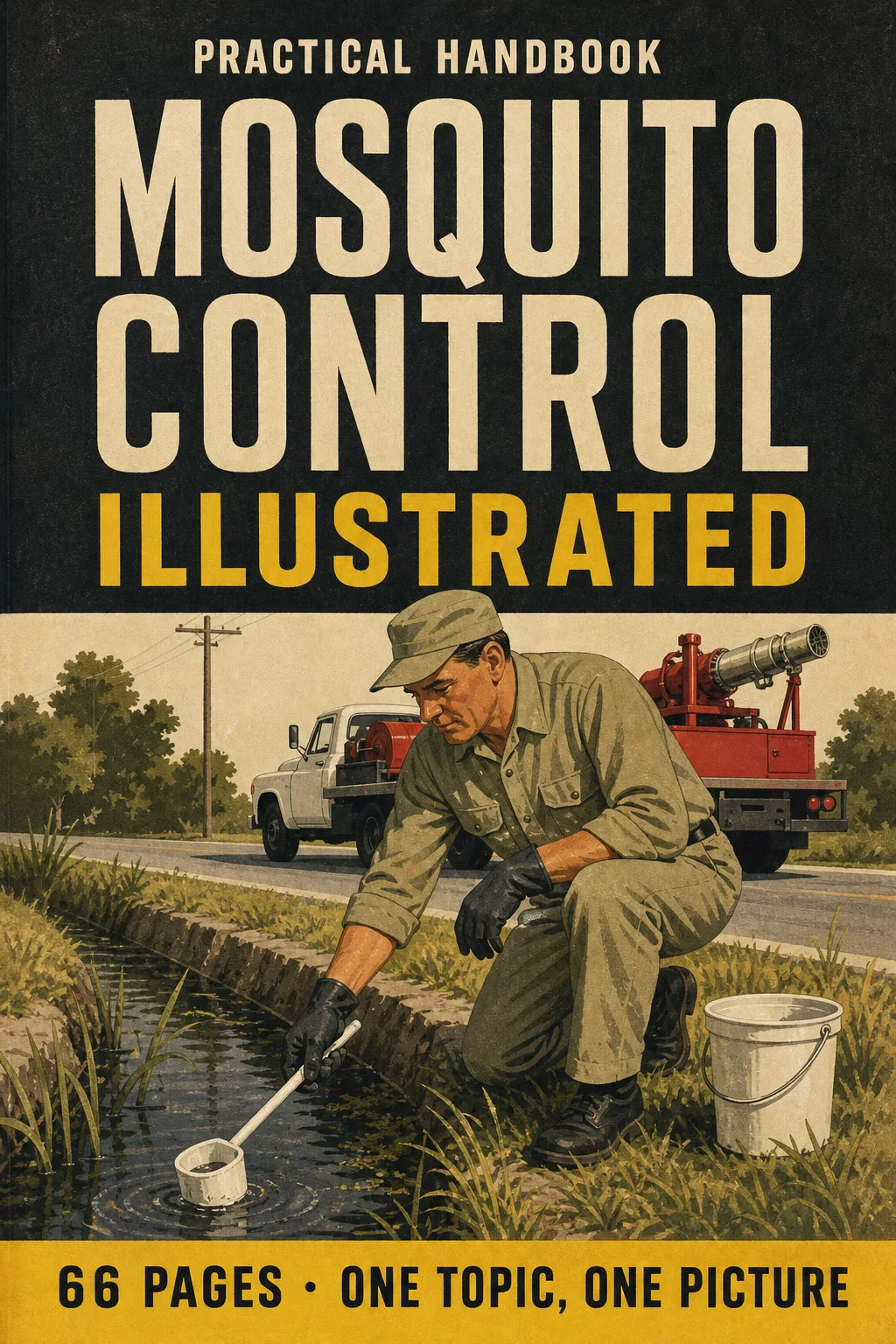
Mosquito Control Illustrated: Your State Category Exam in Drawings, in the Order You Work in the Field One Topic on Every Page

The life cycle, Aedes vs. Culex vs. Anopheles, larval dipping, traps, “Tip, Toss, Cover,” Bti and methoprene, ULV droplets and wind, calibration, the label and records. Every topic gets its own page: the drawing first, then what you need to remember. 66 illustrated pages.

START STUDYING THIS WAY

🔒 Secure checkout · PDF by email · 30-day guarantee

Every topic, its own pageEach stage, product and rule drawn, with the explanation right beside it
66 illustrated pages9 parts, from the field order to the night-before checklist
Up-to-date sourcesEPA (FIFRA, 40 CFR Part 171), your state category manual and CDC guidance
PDF by emailFormat

Look Inside the Book

Every page has one big drawing and a box with the numbers, rules and steps you need to know:

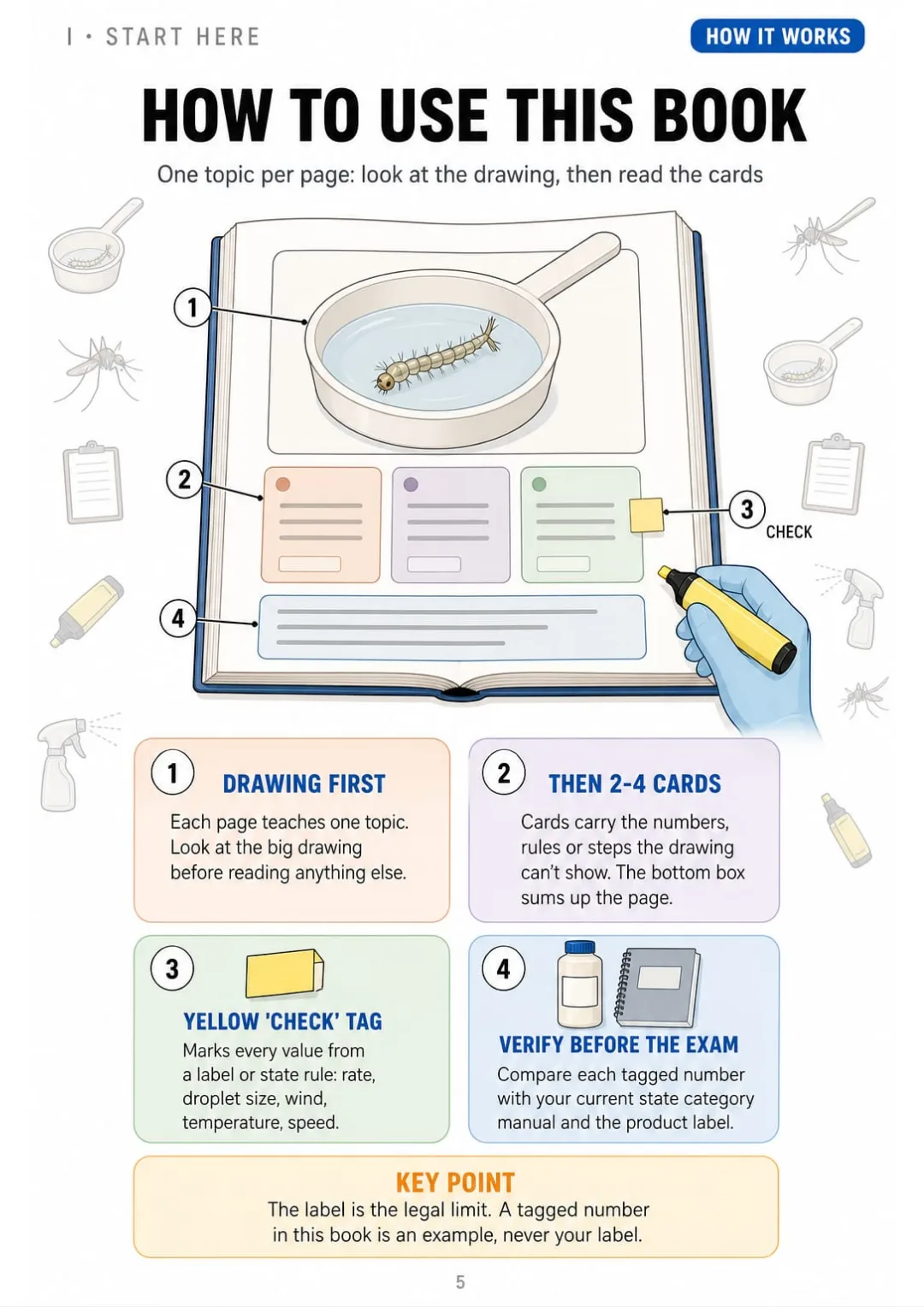
One topic per page: the drawing, 2-4 cards, and a yellow tag on every label value
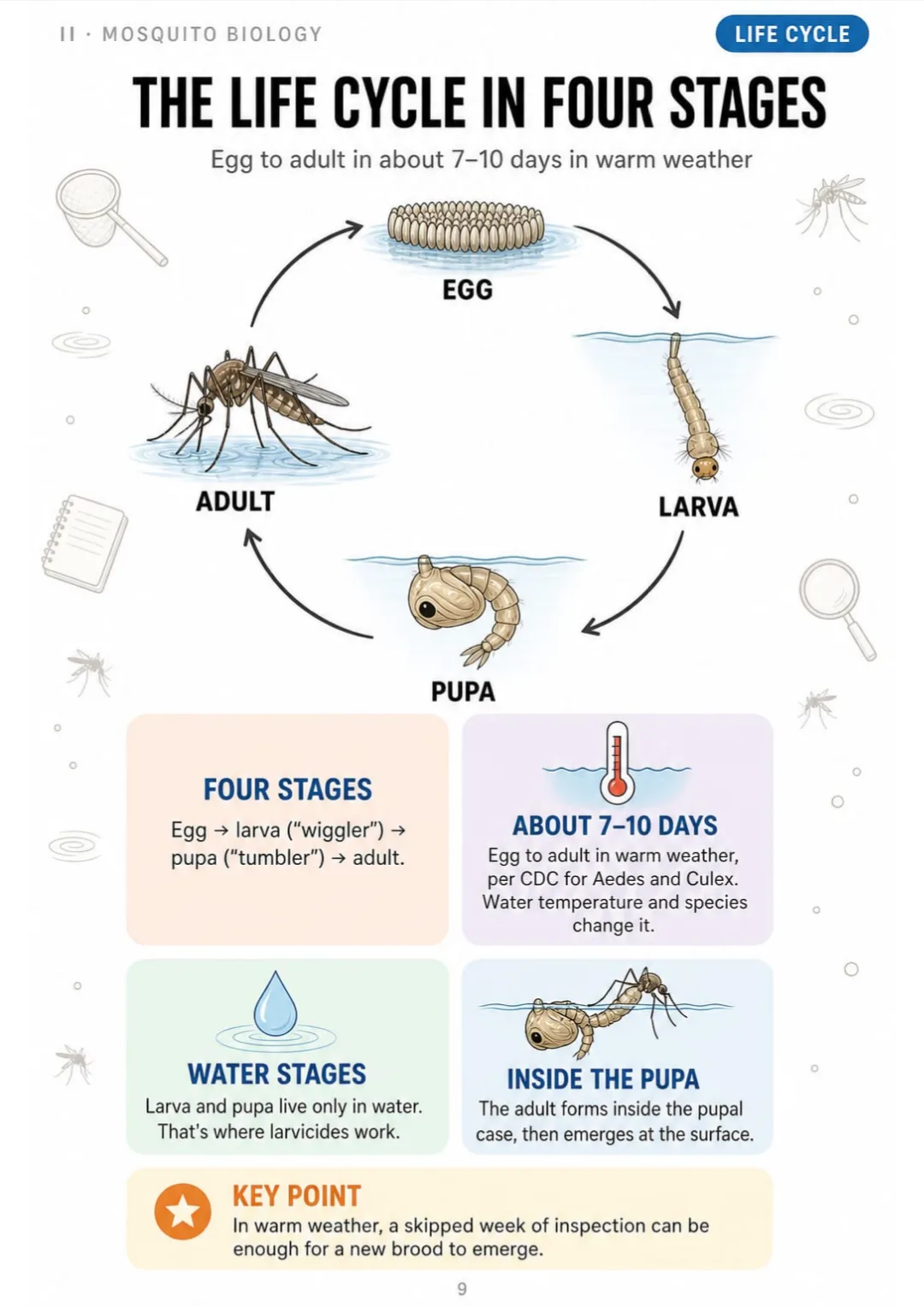
Egg → larva → pupa → adult: about 7–10 days in warm weather (CDC)
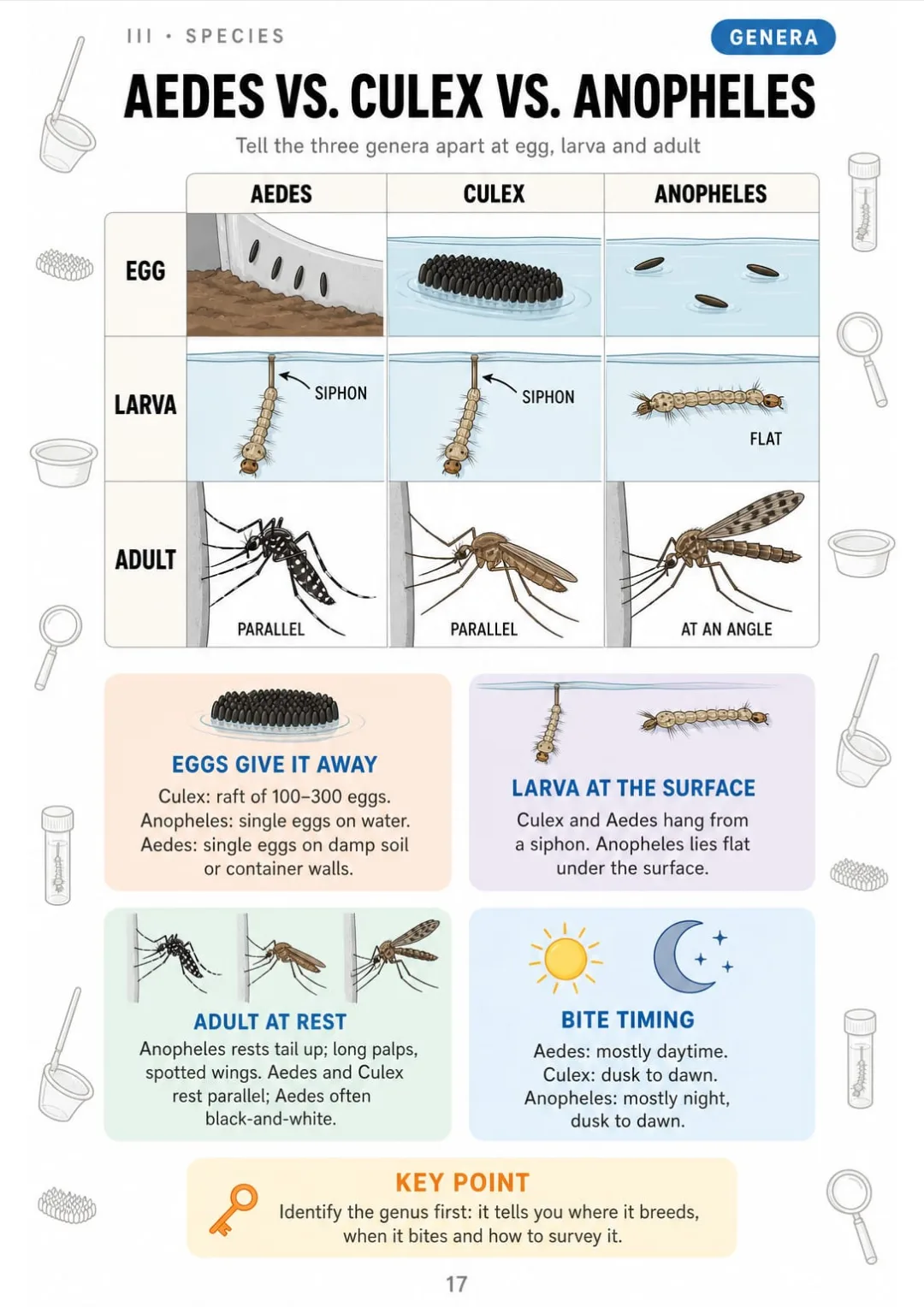
Egg raft, single eggs, siphon or flat larva, tilted or parallel adult: the three genera on one page.
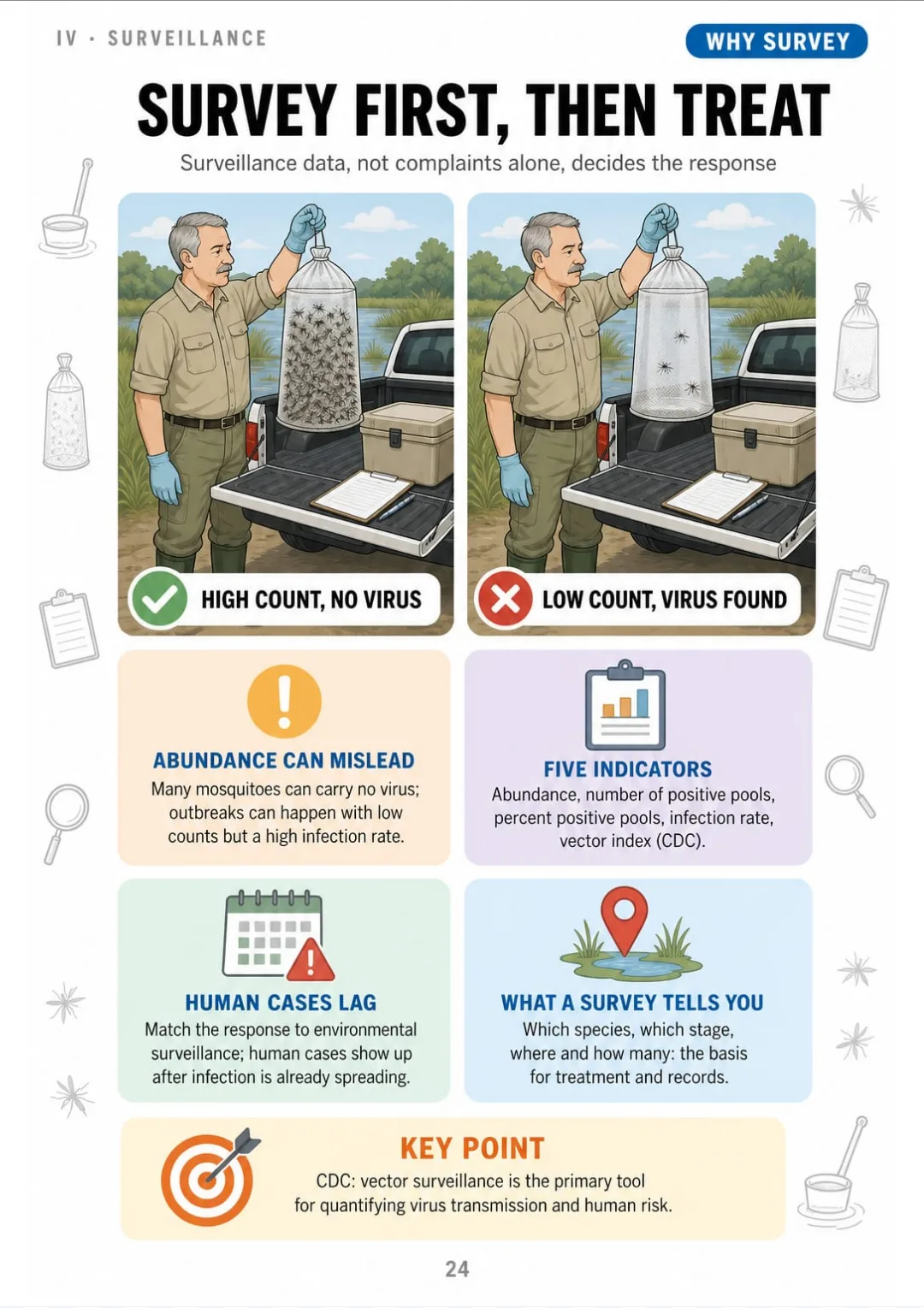
CDC: abundance alone misleads; watch infection rate, positive pools and vector index.
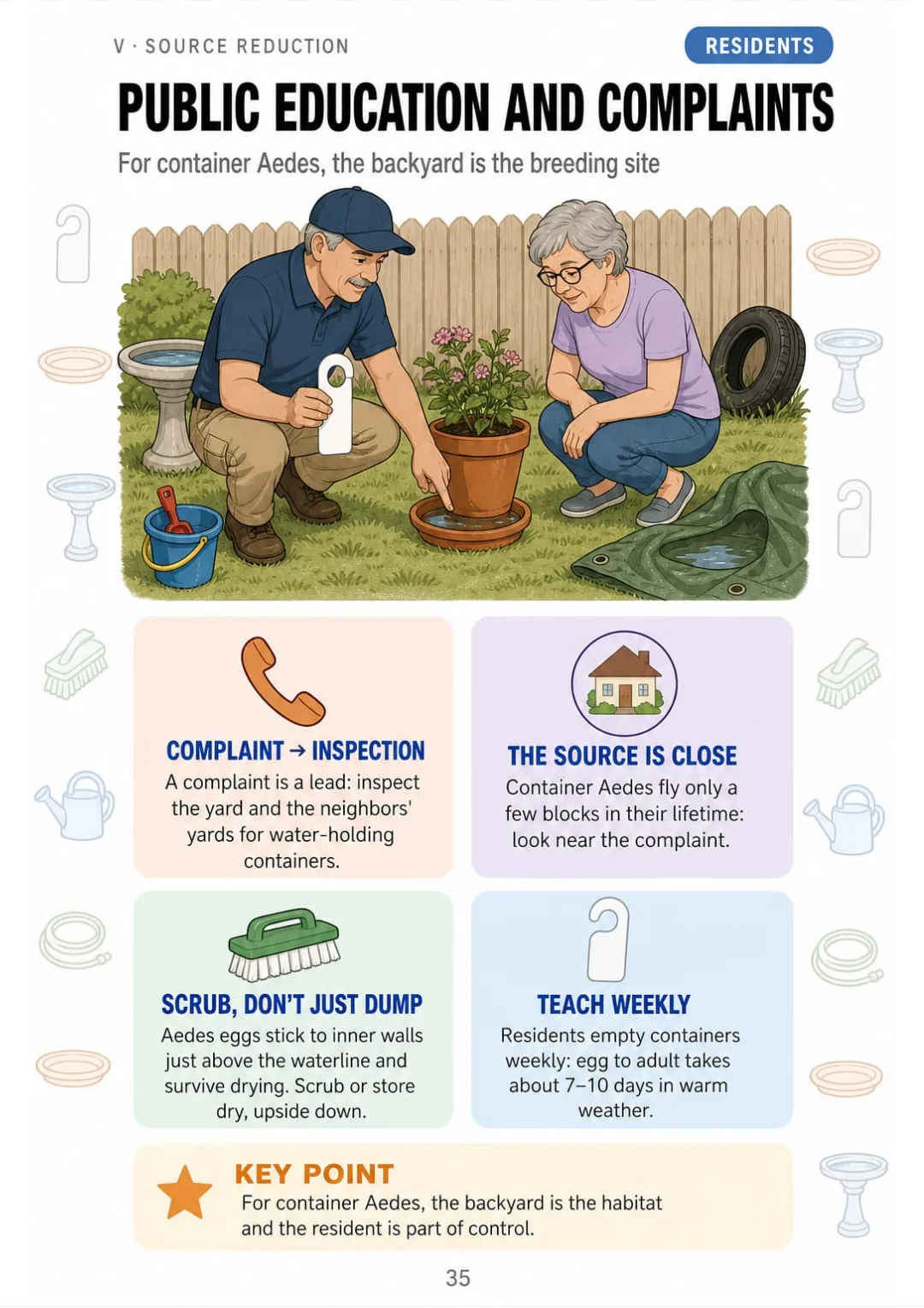
Container Aedes fly a few blocks: the source is near the complaint; empty weekly
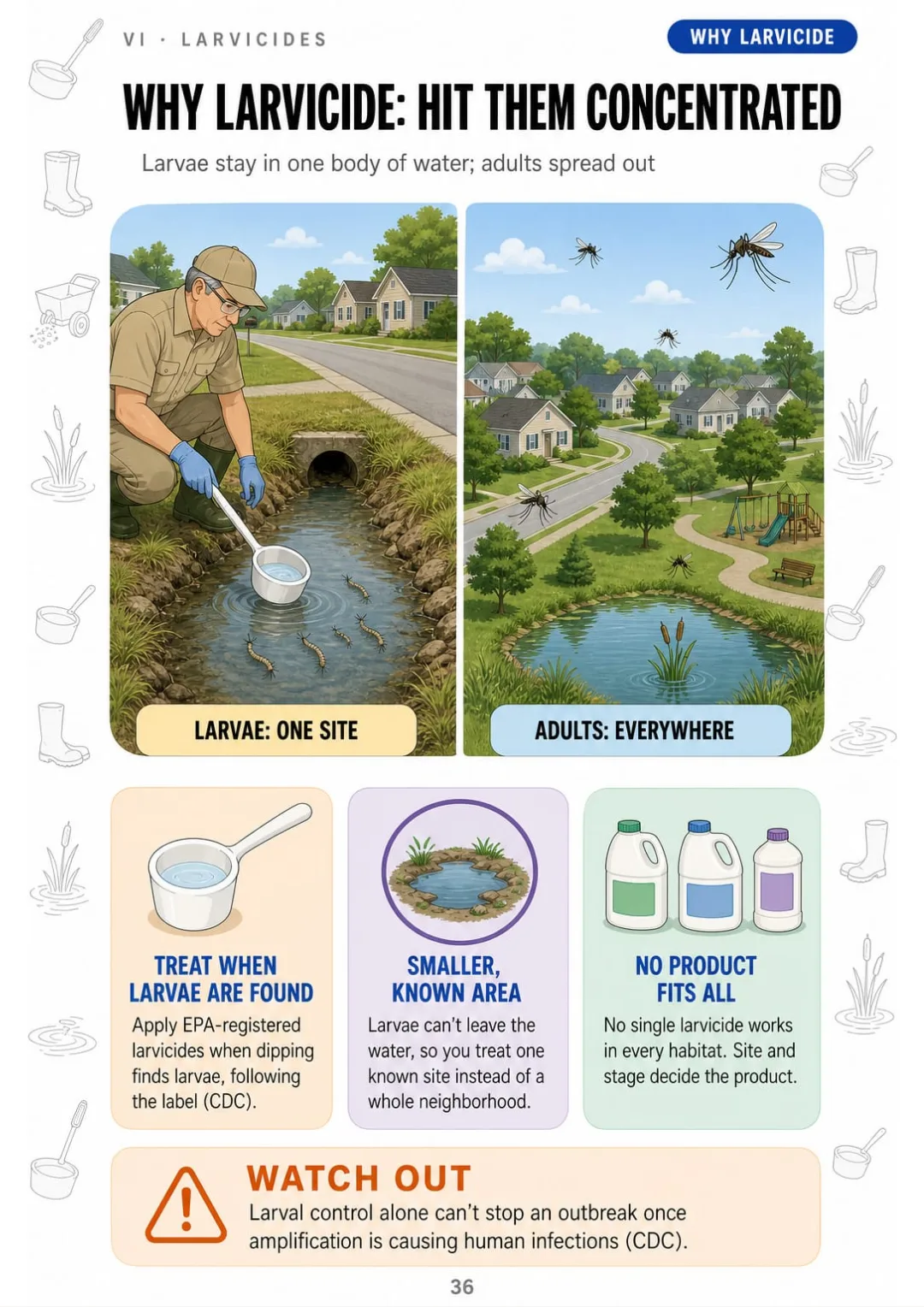
Larvae are trapped in the water; adults are everywhere. After source reduction, larvicide before adults emerge.
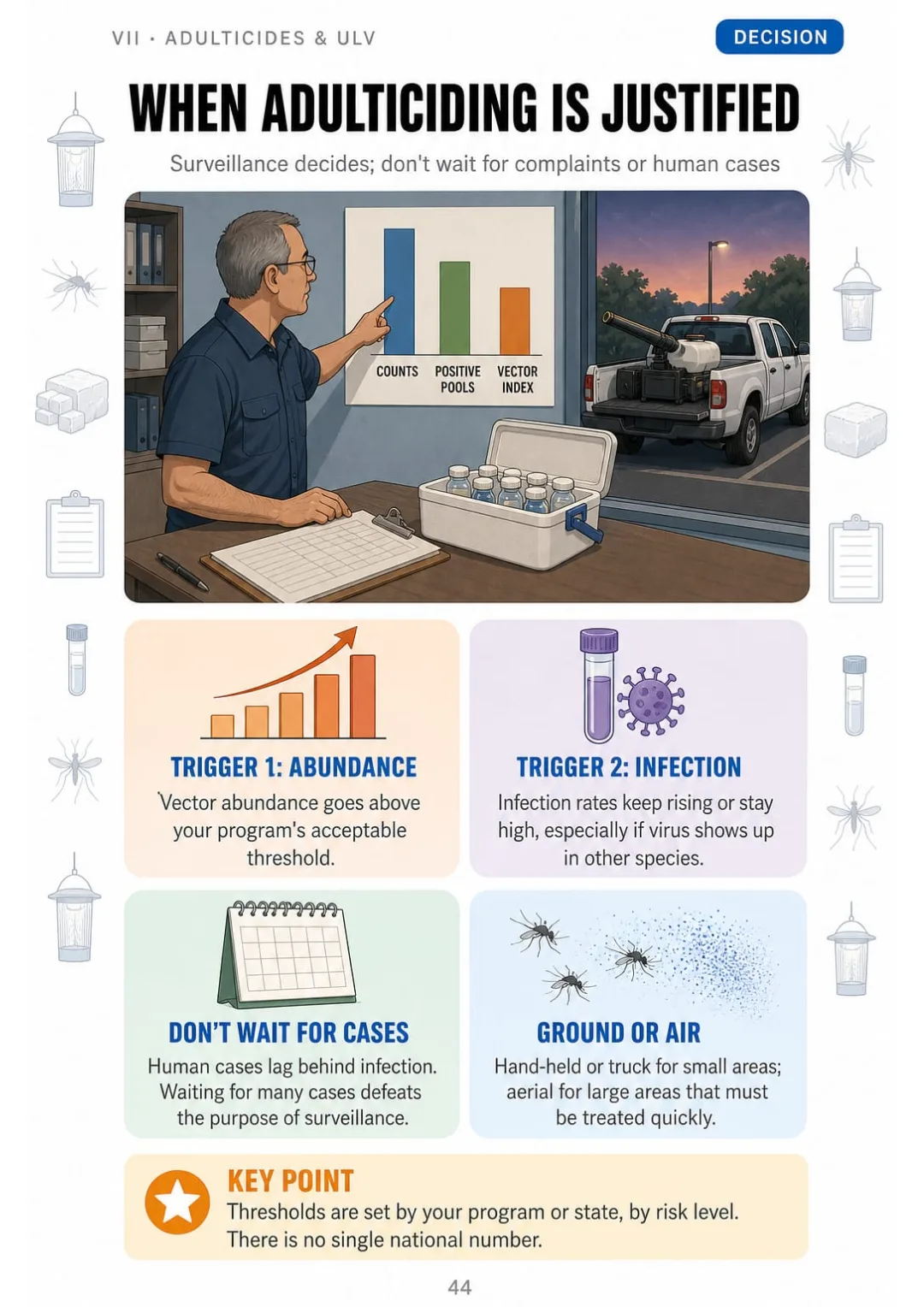
Adulticide when counts pass threshold or infection rates rise: thresholds come from your program, not a national number.
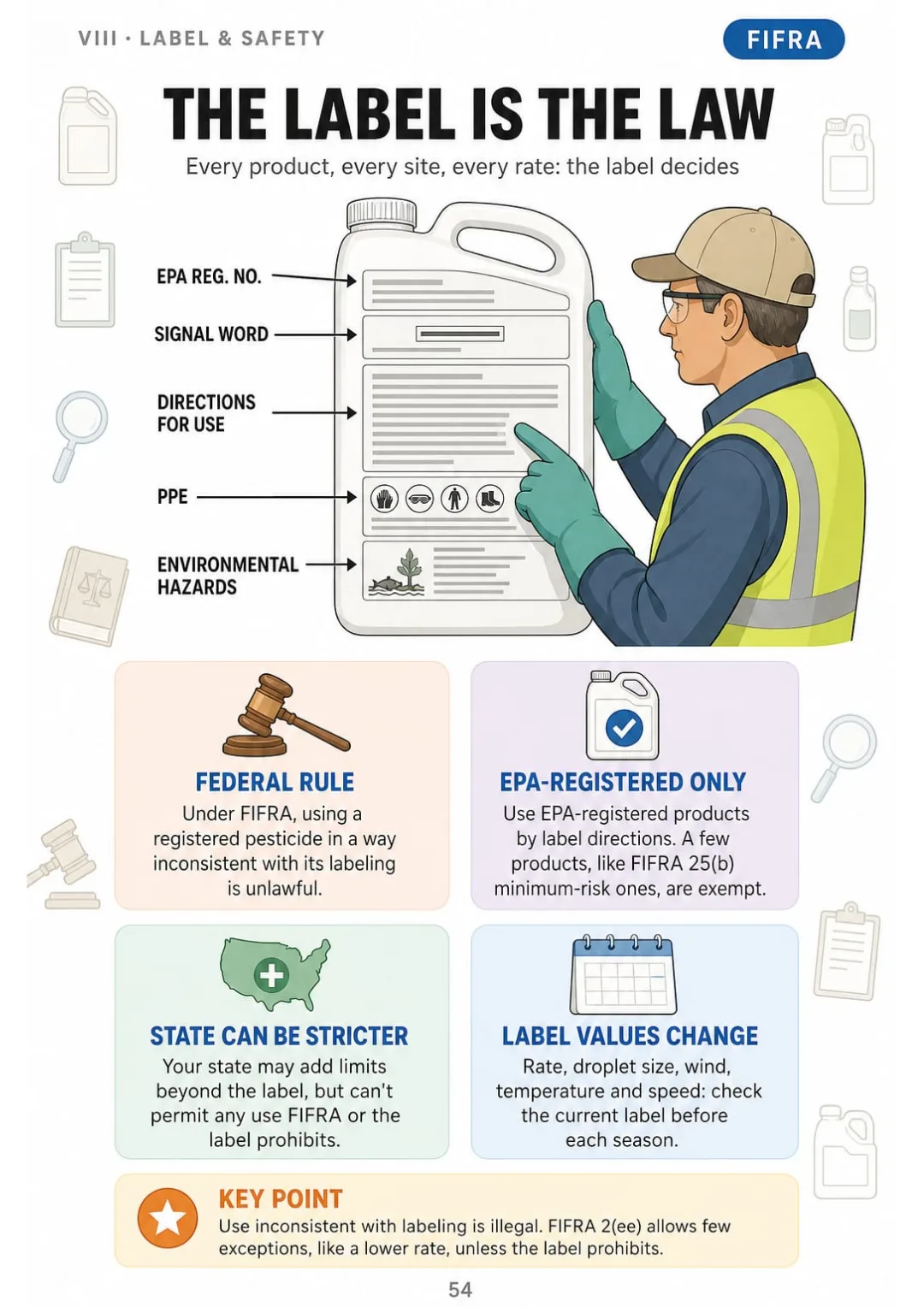
FIFRA: using a product inconsistent with its label is unlawful; states may add rules but never permit prohibited uses

Swipe to see more →

These are real pages from the book. The table of contents is the full one: 9 parts and 62 topics.

The Problem Isn't You. It's How It Was Explained to You.

You're at a catch basin with a full dipper, and your supervisor asks: Culex or Anopheles? To you, every larva in the cup looks the same.

You read that section of the manual last night. Egg rafts, siphons, resting angles: three genera described in paragraphs, one after another, with nothing to look at. By morning it's one big blur.

Egg raft, single eggs, siphon or flat larva, tilted or parallel adult: the three genera on one page.

In this book it's a single page. Aedes, Culex and Anopheles side by side: the egg raft next to the single eggs, the larva hanging from its siphon next to the one lying flat, the adult resting tilted next to the ones resting parallel.

The rest works the same way: the life cycle, larval dipping, “Tip, Toss, Cover,” when adulticiding is justified and the label. Each one has its own page.

You look at the cup, you know what you're looking at, and you write it on the dip sheet without going back to the manual.

COMPARE FOR YOURSELF

The Same Topic, Two Ways to Study It

THIS
  • The manual: line after line of text
  • Egg, larva, pupa and adult explained only in words
  • You walk into the exam still unsure
Mosquitoes undergo complete metamorphosis, passing through four distinct developmental stages: egg, larva, pupa and adult. The first three stages are aquatic. Depending on the genus, eggs are deposited singly or in rafts on the water surface, or on moist substrates subject to subsequent flooding. Larvae feed on suspended organic matter and molt through four instars prior to pupation. The pupal stage is non-feeding. Under favorable temperature conditions, development from egg to adult may be completed in approximately seven to ten days, although duration varies considerably with species and environmental factors.
FOR THIS
  • The life cycle in one drawing
  • The stages and the days in a box
  • You see it and you get it
Egg → larva → pupa → adult: about 7–10 days in warm weather (CDC)
CONTENTS

Take a Look at the 9 Parts and 62 Topics

The job and the exam, mosquito biology, species and where they breed, surveillance, source reduction, larvicides, adulticides and calibration, label and safety, and a final exam review: 66 pages, all illustrated

IStart Here: The Job and the Exam · pp. 5-8
  1. How to Use This Book
  2. Core Exam + Category Exam: What You're Studying For
  3. The Field Order: Identify → Survey → Reduce → Larvicide → Adulticide → Record
  4. Why Mosquito Control Is Public Health
IIMosquito Biology · pp. 9-16
  1. The Life Cycle: Egg, Larva, Pupa, Adult
  2. Eggs: Rafts, Singles and Floodwater Eggs
  3. Larvae: Four Instars and a Breathing Siphon
  4. Pupae: The Stage That Doesn't Eat
  5. Adults: Only Females Bite
  6. How Mosquitoes Find You: CO2, Heat and Odor
  7. When They Bite: Day, Dusk and Night
  8. Flight Range: Backyard vs. Marsh
IIISpecies and Where They Breed · pp. 17-23
  1. Aedes vs. Culex vs. Anopheles Side by Side
  2. Container Aedes: Aedes aegypti and Aedes albopictus
  3. Floodwater and Salt Marsh Aedes
  4. Culex: The West Nile Vector
  5. Anopheles: Clean, Still, Sunlit Water
  6. Culiseta melanura and EEE
  7. Habitat Map: Where to Look First
IVSurveillance · pp. 24-30
  1. Why Survey Before You Treat
  2. Larval Dipping Step by Step
  3. CDC Light Trap with CO2
  4. Gravid Traps and BG-Sentinel Traps
  5. Ovitraps for Container Aedes
  6. Landing Counts
  7. Virus Testing: Pools, Sentinel Chickens and Dead Birds
VSource Reduction and Biological Control · pp. 31-35
  1. Source Reduction: Tip, Toss, Cover
  2. Ditches, Drains and Catch Basins
  3. Open Marsh Water Management (OMWM)
  4. Mosquitofish and Other Predators
  5. Public Education and Complaints
VILarvicides · pp. 36-43
  1. Why Larvicide: Hit Them While They're Concentrated
  2. Bti: Bacillus thuringiensis israelensis
  3. Bacillus sphaericus (Lysinibacillus sphaericus)
  4. Methoprene: The IGR That Leaves No Dead Larvae
  5. Spinosad and Other Larvicides
  6. Oils and Monomolecular Films: The Pupa Option
  7. Formulations: Liquid, Granule, Briquet, Pellet
  8. Choosing the Larvicide by Stage and Site
VIIAdulticides, ULV and Calibration · pp. 44-53
  1. When Adulticiding Is Justified
  2. Adulticide Classes: Pyrethroids, Pyrethrins and Organophosphates
  3. ULV: Tiny Droplets That Hang in the Air
  4. Droplet Size in Microns: Why Small Matters
  5. Wind, Temperature and Inversions
  6. Truck ULV: Speed, Swath and Route
  7. Calibration Formula: Flow Rate in Fluid Ounces per Minute
  8. Worked Example: ULV Truck Calibration
  9. Checking Droplets: Slides and Instruments
  10. Worked Example: Granular Larvicide by Area
VIIILabel, Safety, Environment and Records · pp. 54-61
  1. The Label Is the Law (FIFRA)
  2. Signal Words and Restricted Use Pesticides
  3. PPE: What the Label Asks For
  4. Mixing, Loading and Storage
  5. Spills: Control, Contain, Clean Up
  6. Bees, Fish and Endangered Species
  7. Spraying Over Water: The NPDES Permit
  8. Records and Notification
IXExam Review · pp. 62-66
  1. Product to Stage: The One-Page Match
  2. The Numbers to Know, With Units
  3. Look-Alike Pairs That Get Mixed Up
  4. Practice Calibration: Three Problems
  5. Night-Before Checklist

One Page, One Topic, All Clear

Think of it this way:

It's spring, there's standing water in a row of old tires behind a body shop, and you have to decide on the spot: dump it, treat it, or both?

You open the source reduction page and it's drawn: Tip, Toss, Cover, next to the egg-to-adult clock of about 7–10 days in warm weather, so you see why containers get emptied every week.

Container Aedes fly a few blocks: the source is near the complaint; empty weekly

Same with the three genera, larval dipping, Bti and methoprene, ULV droplets and wind, and the calibration math: each one on its own page.

Mosquito Control Illustrated is 9 parts and 62 topics, all drawn, and it closes with an exam review: the numbers to know with units, look-alike pairs and three practice calibrations.

What you see drawn, you don't have to memorize.

What's Inside Mosquito Control Illustrated:

Ipp. 5-8

Start Here: The Job and the Exam

How to use the book, core exam vs. category exam, and the field order from identify to record, so every later page fits into the same sequence. Plus why mosquito control is public health.

IIpp. 9-16

Mosquito Biology

The life cycle, egg rafts and floodwater eggs, the four larval instars, the pupa that doesn't eat, why only females bite, how they find you, when they bite and how far they fly.

IIIpp. 17-23

Species and Where They Breed

Aedes, Culex and Anopheles side by side, container Aedes, floodwater and salt marsh species, Culex and West Nile, Anopheles water, Culiseta and EEE, and a habitat map.

IVpp. 24-30

Surveillance

Why you survey first, larval dipping step by step, CDC light traps with CO2, gravid and BG-Sentinel traps, ovitraps, landing counts and virus testing.

Vpp. 31-35

Source Reduction and Biological Control

Tip, Toss, Cover, ditches and catch basins, Open Marsh Water Management, mosquitofish and other predators, and handling public complaints.

VIpp. 36-43

Larvicides

Why larvicide, Bti, Bacillus sphaericus, methoprene, spinosad, oils and films for pupae, formulations, and choosing the larvicide by stage and site.

VIIpp. 44-53

Adulticides, ULV and Calibration

When adulticiding is justified, adulticide classes, ULV and droplet size in microns, wind and inversions, truck speed and swath, and the calibration formula with two worked examples, so you work the math in the same steps every time.

VIIIpp. 54-61

Label, Safety, Environment and Records

The label is the law, signal words and RUPs, PPE, mixing and storage, spills, bees and fish, the NPDES permit for spraying over water, records and notification.

IXpp. 62-66

Exam Review

Product to stage on one page, the numbers to know with units, look-alike pairs, three practice calibrations and a night-before checklist.

At the end of the book: A one-page product-to-stage match, the numbers to know with units, three practice calibration problems and a night-before checklist.
Plus: 2 Free Books

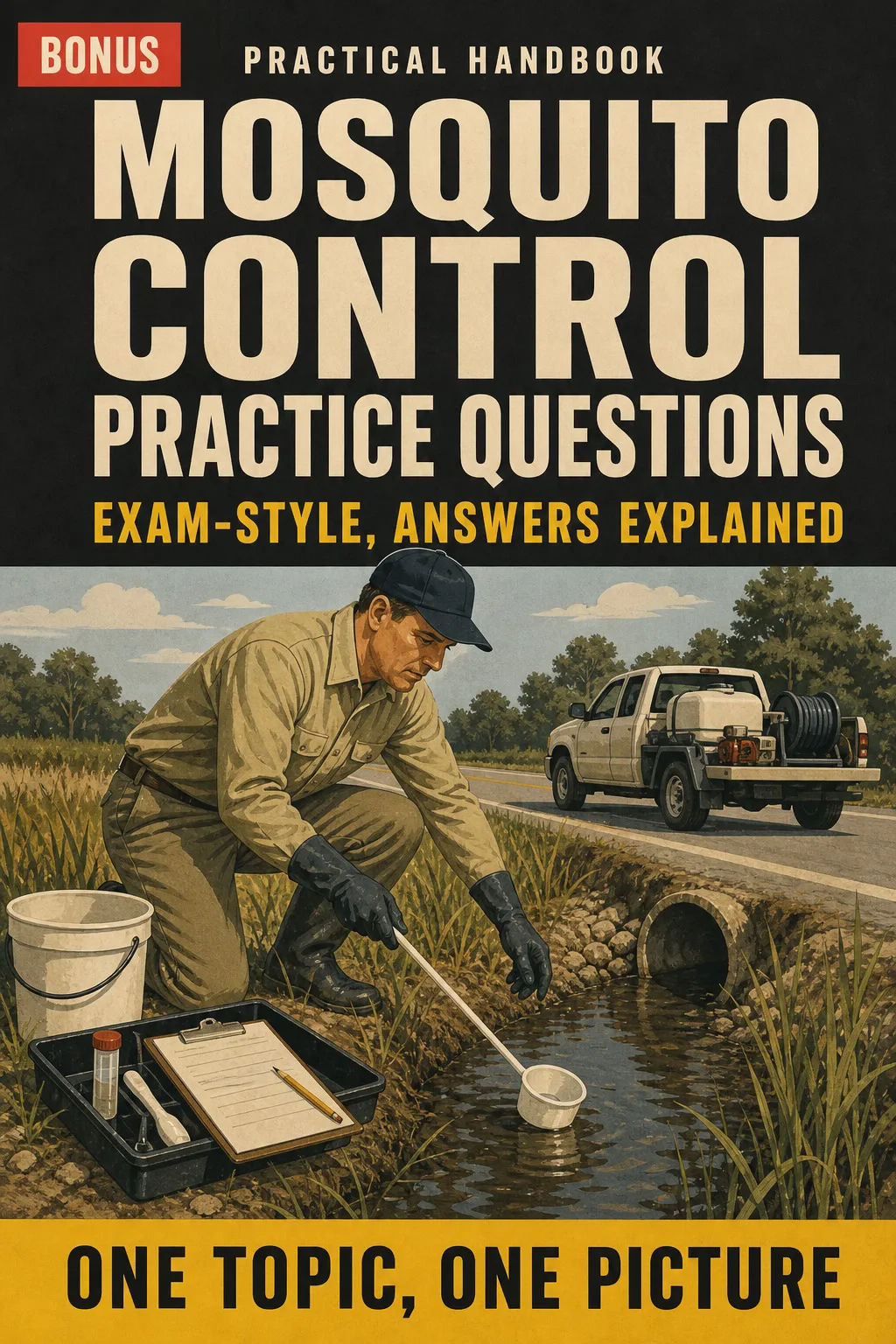
Mosquito Control Practice Questions: Exam-Style, Answers Explained

BONUS 1: «Mosquito Control Practice Questions: Exam-Style, Answers Explained»

Value on its own: US$ 17.90

Test yourself topic by topic with exam-style questions, and see on the same page why the right answer is right and the other ones aren't.

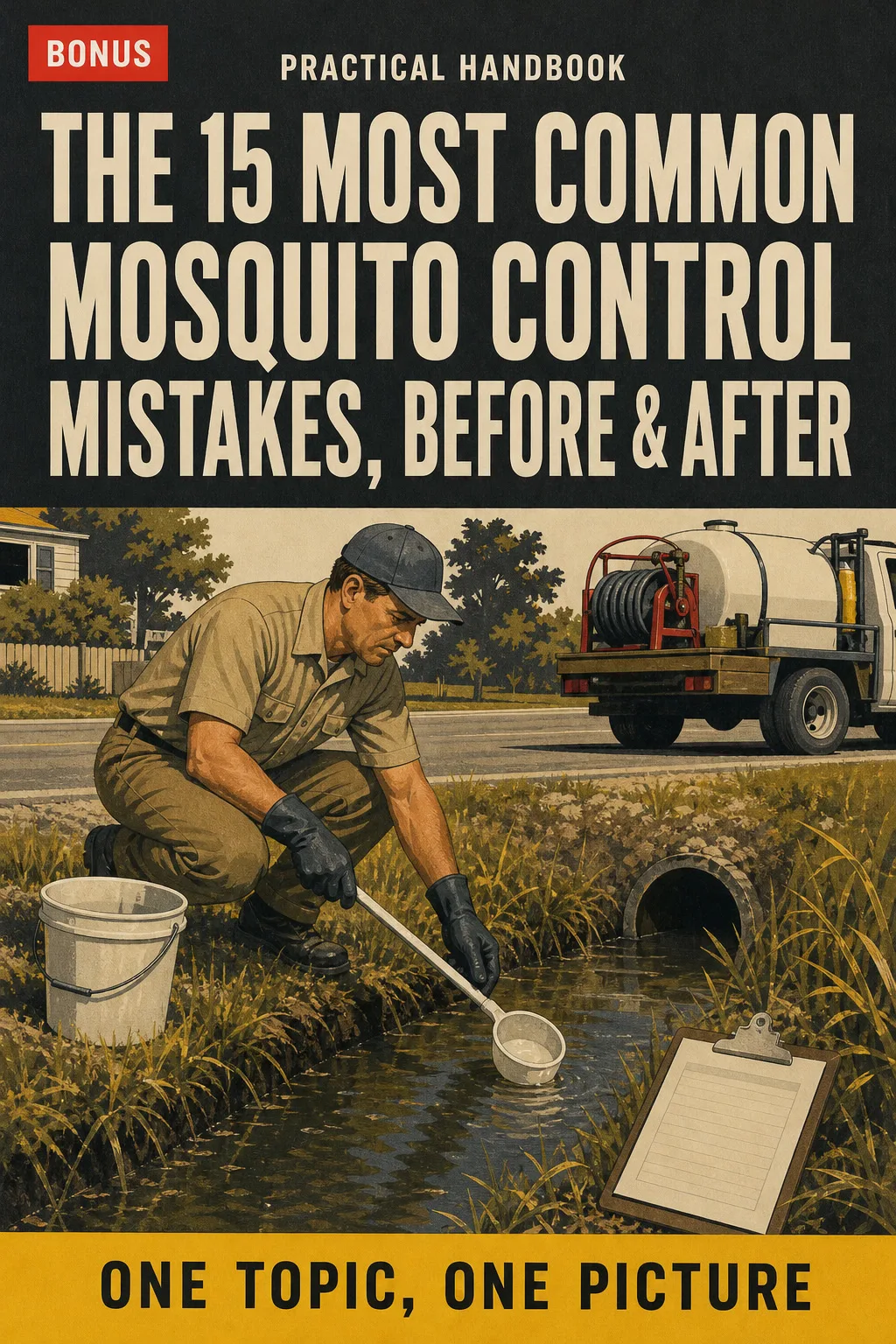
The 15 Most Common Mosquito Control Mistakes, Before & After

BONUS 2: «The 15 Most Common Mosquito Control Mistakes, Before & After»

Value on its own: US$ 14.90

Review the mistakes that come up most in the field and on the exam, each one drawn wrong and then right, so you spot them at a glance.

Mosquito Control Illustrated with 2 Free Books

  • Mosquito Control Illustrated: 66 illustrated pagesUS$ 63
  • BONUS 1: Mosquito Control Practice Questions: Exam-Style, Answers ExplainedUS$ 17.90
  • BONUS 2: The 15 Most Common Mosquito Control Mistakes, Before & AfterUS$ 14.90
  • High-resolution PDF to printIncluded
Total value US$ 95.80
YOUR PRICE:
US$ 27
You save US$ 68.80
YES, I WANT MOSQUITO CONTROL ILLUSTRATED FOR US$ 27

📄 This is a digital PDF book sent to your email: nothing is printed or shipped.

Secure purchaseEncrypted payment30-day guarantee

PDF by email: We email you Mosquito Control Illustrated as a PDF, together with the two free books. It's a single payment: no installments, no extra charges.

Who This Book Is For

You're studying the category manual

You're studying the category manual

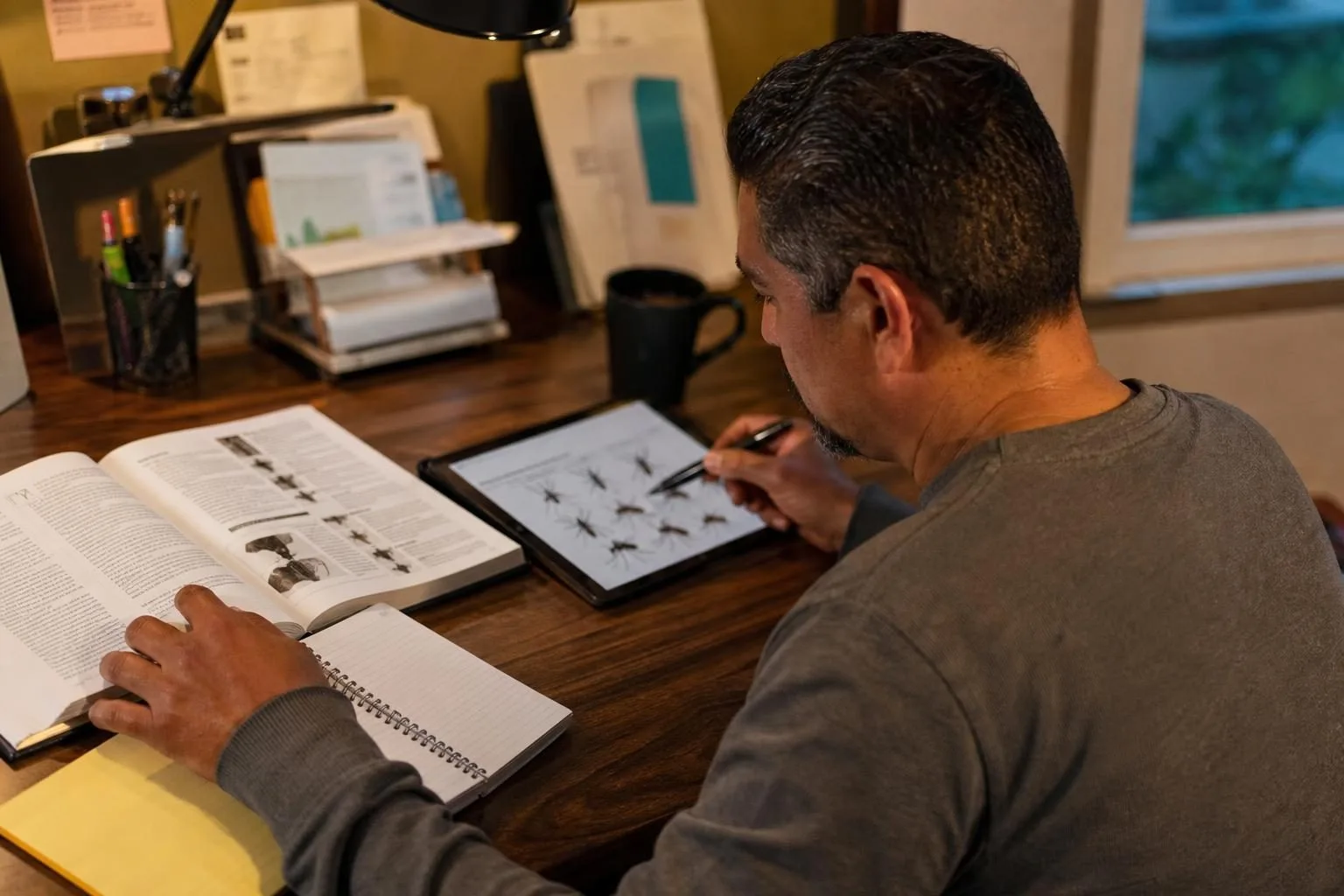
Every topic in the manual becomes one page with a drawing, in the same order you work in the field. You study after your shift, one page at a time.

Your exam date is coming up

Your exam date is coming up

The review pages put product to stage, the numbers with units and the look-alike pairs right in front of you, so the night before, you go over what you need.

You already work in mosquito control

You already work in mosquito control

Print it and keep it in the truck: the three genera, the dipping steps and the label rules, ready for when the supervisor or a neighbor asks.

Everything You Get Today

US$ 95.80US$ 27
YES, I WANT MOSQUITO CONTROL ILLUSTRATED FOR US$ 27

📄 This is a digital PDF book sent to your email: nothing is printed or shipped.

30DAYS
GUARANTEE

30-Day Guarantee

Try Mosquito Control Illustrated for 30 days, bonus books included.

We refund everything if the file won't open, if the book isn't what you see here, if you were charged twice or if the email doesn't arrive. Just email us.

You pay once. No subscriptions.

Frequently Asked Questions

Is it for me if I already work in mosquito control and just need my certification?

Yes. It's written for adults who already do the job or are starting out in a mosquito control program. Each state writes its own exam, so use the book alongside your state's category manual. It covers the public health / mosquito control category, not the general core exam.

Where does the content come from?

From EPA guidance on applicator certification (FIFRA, 40 CFR Part 171), state public health / mosquito control category manuals, the National Pesticide Applicator Certification Core Manual, and CDC and AMCA integrated mosquito management guidance. Every label value is tagged for you to check against the current label and your state's edition.

Is it official material?

No. It's an independent study book. It isn't published by or affiliated with the EPA, the CDC, the AMCA or any state agency.

Does it replace my training course?

No. It doesn't replace your state manual, your program's training, field supervision or the product label, and it isn't medical advice. It doesn't give you a certificate, a license or CEU credits: your state issues your certification after you pass its exams. The book helps you understand and review what you study.

Are the practice questions the ones on the exam?

No. They're written for this book, in exam style, with the answer explained. They aren't official questions from any exam.

How do I get it?

The book and the 2 bonus books arrive as PDFs by email, at the address you enter at checkout.

Do I have to pay every month?

No. It's a one-time payment. No subscription.

Can I have it on paper?

Yes. The PDF is ready to print, at home or at a print shop, so you can keep it in the truck.

How do refunds work?

You have 30 days. We refund everything if the file won't open, if the book isn't what you see on this page, if you were charged twice or if the email doesn't arrive: just email us.

Before You Close This Page

No more rereading with nothing sticking.

Aedes, Culex and Anopheles: you see them drawn side by side, and it sticks.

You walk into the exam knowing where everything is.

Drawings make studying faster.

The book is right below.

One-time payment: US$ 27 · Guarantee: 30 days · PDF by email

YES, I WANT MOSQUITO CONTROL ILLUSTRATED FOR US$ 27

📄 This is a digital PDF book sent to your email: nothing is printed or shipped.